Isabelle Rossignol
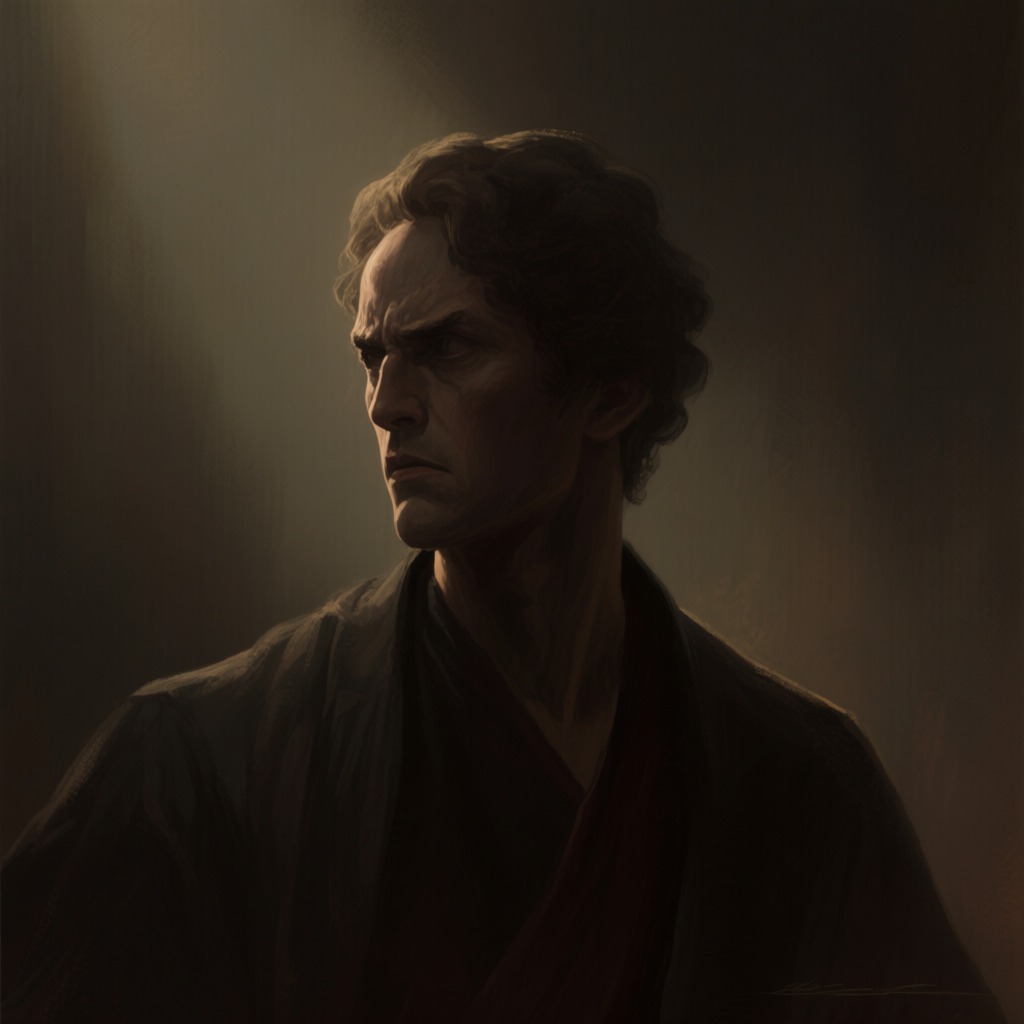
Isabelle Rossignol is the younger sister of Vianne Mauriac and a central figure in the French Resistance during World War II. Her journey from a willful, often misunderstood girl to the legendary passeur known as the Nightingale defines the novel's exploration of courage, sacrifice, and the transformative power of love and purpose in the face of overwhelming evil. Her story is one of relentless defiance, profound loss, and an unwavering commitment to a cause greater than herself.
Identity and Background
Isabelle is introduced as a girl shaped by abandonment and grief. After her mother's death, her father, Julien Rossignol, sent her and her sister Vianne to live with a cold, unloving woman in Carriveau. Vianne, herself a grieving teenager, was unable to care for her needy younger sister, and Isabelle was soon sent away to a series of boarding schools and convents from which she was repeatedly expelled. This pattern of rejection forged in her a defiant, impulsive nature. She was known for her beauty, her inability to hold her tongue, and a desperate longing to be seen and loved. Her father, a poet and bookseller broken by the Great War, remained emotionally distant, and Isabelle learned to rely only on herself. She dreamed of being a hero like Edith Cavell, a nurse executed by the Germans in the previous war, a fantasy that seemed absurd to those around her.
Arc Through the Plot
Isabelle's transformation begins with the fall of France. Forced to flee Paris during the exodus, she witnesses the brutal machine-gunning of refugees by German Stukas near Tours, an event that sears her with a hatred for the Nazis and a determination to fight. After a harrowing journey, she arrives at her sister's home, Le Jardin, only to find Vianne passive and resigned to the occupation. Their conflict is immediate and deep. Isabelle's anger and desire for action clash with Vianne's desperate need for safety and her belief that surrender was the only way to survive. When a German captain, Wolfgang Beck, is billeted in their home, Isabelle's defiance becomes a direct threat. She hacks off her own hair in front of him, a symbolic act of rebellion. Unable to contain her fury, she leaves for Paris, where she begins distributing anti-German tracts for a local Resistance cell. Her work escalates when she is recruited by a network in Paris, given the code name Juliette Gervaise, and tasked with delivering messages and, eventually, creating an escape route for downed Allied airmen. This mission becomes her life's purpose. She leads dozens of men across the treacherous Pyrenees mountains into Spain, earning the legendary code name "the Nightingale." Her father, whom she had believed to be a collaborator, is revealed to be a forger for the Resistance, and he sacrifices himself to save her after she is arrested and tortured by the Gestapo. She is deported to Ravensbrück concentration camp, where she endures unimaginable suffering but survives through sheer will and the support of fellow prisoners. She is liberated in the spring of 1945, a broken but unbroken woman.
Key Actions and Objectives
Isabelle's primary objective is to fight for a free France. Her actions are defined by a reckless but effective courage. She begins by chalking "V" for victory on Nazi posters, a small act of defiance that leads her to a local Resistance cell. She then becomes a courier, distributing tracts and later delivering secret messages and money. Her most significant contribution is the creation and operation of the Nightingale escape route. She personally leads groups of airmen across the Pyrenees, a grueling and dangerous journey through snow, ice, and enemy patrols. She secures funding from MI9, establishes a network of safe houses, and trains the airmen in proper behavior to avoid detection. Her work is a constant, high-stakes gamble, and she is fully aware that capture means torture and death. Her objective is not personal glory but the simple, profound goal of getting men back to England so they can continue to fight.
Relationships and Conflict
Isabelle's most significant relationship is with her sister, Vianne. Theirs is a story of deep, unresolved conflict born from childhood abandonment and exacerbated by their opposing responses to the war. Vianne's cautious, rule-following nature clashes violently with Isabelle's impulsive rebellion. Isabelle feels judged and unloved by Vianne, while Vianne sees Isabelle as a reckless danger to her family. Their conflict comes to a head when Isabelle hides a wounded airman in Vianne's barn, leading to the killing of Captain Beck. Vianne, in her terror, tells Isabelle she is not welcome and that she would turn her in herself. This is the lowest point in their relationship, a wound that seems irreparable. However, the war forces them to change. Vianne, after witnessing the deportation of her best friend Rachel, begins her own quiet resistance, hiding Jewish children. Isabelle, after her father's sacrifice and her time in the camps, learns the value of the love she has been given. Their reunion after the war is a fragile but hopeful beginning of a new understanding. Isabelle's other key relationship is with Gaëtan Dubois, a former prisoner and communist she meets during the exodus. He is the first person to see past her beauty and take her seriously. Their love is forged in the crucible of war, marked by long separations, constant danger, and a deep, unspoken fear of loss. He is her anchor, and his love helps her survive the camps.
Change and Ending
Isabelle undergoes a profound transformation. The impulsive, reckless girl who sought attention and love becomes a disciplined, courageous woman who finds her purpose in serving others. The war strips her of her vanity, her health, and her innocence, but it also reveals her core strength. She learns that true courage is not the absence of fear but the will to act in spite of it. She also learns the cost of her choices, carrying the guilt of her father's death and the trauma of the camps. After the war, she returns to Le Jardin, a skeletal, feverish shadow of her former self. She is haunted by her experiences and physically broken. Yet, she finds a measure of peace. Gaëtan finds her, and they declare their love. She dies the day after his arrival, surrounded by her sister and the man she loves, having finally heard the words of love from her father in a letter he left before his execution. Her life, as she tells Vianne, was "enough." Her legacy is the 117 men she saved and the enduring love she inspired.
Narrative Role and Evaluation
Isabelle serves as the novel's embodiment of active, heroic resistance. Her story is a counterpoint to Vianne's quieter, more domestic form of survival and resistance. She represents the passionate, self-sacrificing spirit of the French Resistance, a figure of legend whose actions have tangible, life-saving consequences. Her narrative arc is a classic hero's journey, but one that is brutally realistic, showing the immense personal cost of heroism. She is not a flawless icon but a deeply human character whose flaws—her impulsiveness, her need for love, her anger—are the very qualities that drive her to act. Her story is a testament to the power of individual courage and the enduring human need to fight for what is right, even when all hope seems lost. She is the Nightingale, a symbol of hope in the darkness, and her song, though cut short, echoes through the lives she saved and the sister she finally came home to.
Isabelle's character has been central to the novel's enduring popularity, which in turn spurred a protracted film adaptation process. TriStar Pictures optioned the book in March 2015, and after years of development with various directors—including Michelle MacLaren and later Melanie Laurent—the project was revived in July 2025 with Michael Morris at the helm. The casting of Dakota and Elle Fanning as Isabelle and Vianne generated particular excitement, as it marked the first time the real-life sisters would share scenes in a film, having previously only portrayed the same character at different ages. The COVID-19 pandemic caused repeated delays, pushing the start of principal photography from October 2020 indefinitely, and Laurent eventually moved on to direct The Mad Women's Ball. Despite these setbacks, Elle Fanning expressed hope in 2023 that the film would eventually be made, reflecting the lasting fascination with Isabelle's transformation from a rebellious girl into a legendary Resistance figure.